
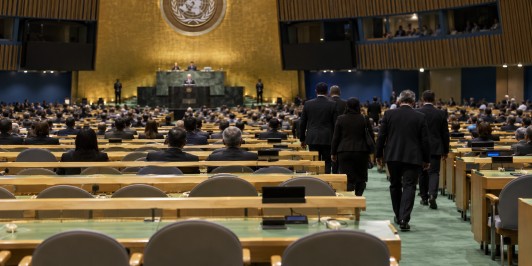
Representatives from Iran and Cuba staged walkouts during U.S. President Donald Trump’s address at the United Nations General Assembly on September 22, as tensions flared over his pointed criticism of both nations. The departures highlighted the diplomatic strain as Trump outlined his administration’s foreign policy stances.
The Iranian delegation exited the assembly hall when President Trump spoke about U.S. military operations and potential further actions against Iran if no agreement was reached. Iranian President Masoud Pezeshkian and Foreign Minister Abbas Araghchi were in New York for the assembly but did not witness the speech. Trump urged global leaders to intensify economic pressure on Tehran, framing the situation as a pivotal choice between diplomacy and escalation.
Cuba’s delegation left the chamber in response to Trump’s characterization of the island nation as a “failed state.” He called for significant changes in Cuba and asserted that the U.S. would prevent foreign adversaries from establishing a foothold there. Trump’s remarks underscored his administration’s hardline stance on Cuba, advocating for increased political freedom on the island.
The walkouts punctuated a speech that saw Trump address various international challenges, reinforcing his administration’s positions on Iran, Cuba, and other global issues before a gathering of world leaders at the UN General Assembly. The reactions from Iran and Cuba signal continuing diplomatic tensions as the U.S. administration pursues its foreign policy objectives.